
Best Neteller Betting Sites in Australia: The Complete 2026 Guide
 Available in US
Why Australian Punters Are Turning to Neteller for Sports Betting
Three years ago, I watched an Australian client lose a full day trying to deposit AUD 200 into his sportsbook account using a bank transfer. The money landed 26 hours later — after the match he wanted to bet on had already kicked off. That was the moment I started recommending e-wallets to every punter who asked me about payment speed, and Neteller kept surfacing as the answer.
The shift is not just anecdotal. Australia's online gambling market is valued at USD 5.5 billion in 2025, with projections pushing it toward USD 9.0 billion by 2034. Digital wallets now account for 31% of all e-commerce payments across Australia, and Neteller — with roughly 2.5 million active users globally and support for 28-plus currencies — sits at the centre of that wave for sports bettors specifically.
AU Online Gambling Market
USD 5.5 billion (2025)
E-Wallet Share of AU E-Commerce
31% of all payments
Neteller Active Users
~2.5 million globally
But here is the part most guides skip: Australia's regulatory landscape changed dramatically in June 2024 when credit cards, credit-funded digital wallets, and cryptocurrency were banned from online wagering. That single rule reshaped how every e-wallet — Neteller included — connects to a sportsbook. If you are still reading advice written before that ban, you are working with outdated information.
I have spent more than nine years tracking digital payment integrations for online sportsbooks, and this guide pulls together everything I know about using Neteller in the Australian betting market right now. Not theory. Not recycled press releases. Practical knowledge built from testing deposit flows, timing withdrawals, and reading the fine print on fee schedules so you do not have to.
The Quick Briefing Before You Dive In
- Australia's credit card ban (June 2024) means your Neteller must be funded by debit card, bank transfer, or another approved source — credit-funded balances are blocked from wagering.
- Neteller deposits at Australian sportsbooks typically process instantly, while withdrawals range from a few hours to two business days depending on the operator and your verification status.
- Expect fees between 0% and 2.5% on the Neteller side, plus potential currency conversion charges if your account is not set to AUD.
- Alternatives like Skrill, PayID, and bank transfer each trade off speed, privacy, and cost differently — no single method wins across the board.
- With 56.1% of Australian gamblers now playing predominantly online, choosing the right payment rail is no longer optional — it is foundational to how you bet.
PuntVault instrument · 01
The Neteller Round-Trip Auditor
Follow one bankroll out of your bank account, through the wallet, into a sportsbook and all the way back. Every guide says fees run "0% to 2.5%". This shows you the dollar figure — including the charges that land on the way out.
What each fix is worth, per cycle
How this is calculated
How Neteller Works for Sports Betting in Australia
I still remember the confusion on a colleague's face when I explained that Neteller is not a bank. "So where does the money actually sit?" he asked. It is a fair question, and one that matters more than most punters realise before they start moving funds through it.
E-wallet — a digital account that holds funds electronically, acting as an intermediary between your bank (or debit card) and the merchant you are paying. Think of it as a digital holding pen: money flows in from your bank, sits in the wallet, then flows out to a sportsbook when you deposit.
Neteller launched in 1999 as one of the earliest online payment services built specifically for the iGaming industry. That heritage matters. While generic payment platforms treat gambling transactions as a regulatory headache, Neteller was engineered for them. The platform processes over AUD 7 billion in annual transaction volume globally, and its top three industry verticals are forex, sports betting, and poker — in that order.
Neteller is owned by Paysafe Group, a publicly traded fintech company with full-year 2024 revenue of USD 1.7 billion and an annualised transactional volume of USD 152 billion. Paysafe also owns Skrill, Neteller's closest competitor in the e-wallet betting space. Understanding this shared ownership is useful when you compare the two later.

The mechanics are simple. You create a Neteller account, verify your identity, and load funds from an approved source — debit card or bank transfer in Australia's post-credit-ban environment. Once your balance is funded, you navigate to any sportsbook that accepts Neteller, select it in the cashier, and enter your deposit amount. The transaction usually processes instantly because Neteller has already cleared the funds on its end.
Funding source — the method you use to load money into your Neteller account. After Australia's 2024 regulatory changes, only debit-linked sources are permitted for gambling-related transactions. Your funding source determines both the speed of your top-up and the fees Neteller charges.
Withdrawals reverse that flow. Winnings move from the sportsbook to your Neteller balance, and from there you can transfer to your bank account, spend via the Net+ Prepaid Mastercard, or hold the balance for future bets. The two-step withdrawal process adds a layer of flexibility that direct bank transfers cannot match — you choose when and how to move money out, rather than waiting for a single pipeline to clear.
One detail I always flag for new users: Neteller supports 28-plus currencies, but the default account currency you pick at registration locks in your primary denomination. If you choose USD instead of AUD, every deposit at an Australian sportsbook triggers a currency conversion — and those fees add up faster than you would expect. Set your account to AUD from day one. And if you plan to manage deposits on the go — which most punters do, given that 57% of global online gambling revenue now flows through mobile devices — the Neteller mobile app streamlines the entire process with biometric login and push notifications for incoming funds.
Top Australian Bookmakers That Accept Neteller
Every few months, someone emails me a screenshot of a sportsbook cashier page and asks, "Does this one take Neteller?" The answer has gotten more complicated since 2024. Some operators quietly dropped e-wallet options after the credit card ban, while others doubled down on them. The landscape shifts, and static lists go stale fast.
What I can tell you is the framework for evaluating whether a bookmaker's Neteller integration is worth your time. Australia's sports betting sector generated USD 2,241 million in revenue in 2025, with the online channel accounting for 72.8% of that figure. The industry itself encompasses around 709 companies, so the range of operators accepting Neteller is broad — but quality varies enormously.
Rather than ranking individual operators (those rankings age poorly and often carry commercial bias), I want to walk you through what actually distinguishes a strong Neteller integration from a mediocre one. The characteristics below are drawn from years of testing payment flows across licensed Australian sportsbooks.
The first marker is deposit speed. A properly integrated Neteller deposit should process in under 60 seconds. If a bookmaker quotes "up to 24 hours" for e-wallet deposits, that is a backend issue on their side, not a Neteller limitation. Second, check withdrawal support. Some operators accept Neteller deposits but force you to withdraw via bank transfer — that defeats half the purpose of using an e-wallet. You want two-way functionality.
Third, look at fee transparency. The best operators absorb the processing cost on deposits and charge nothing extra. Others pass through a percentage or impose a flat fee. Fourth, verify minimum and maximum limits. A bookmaker that caps Neteller deposits at AUD 500 when their bank transfer ceiling is AUD 50,000 is signalling that they tolerate the method without fully supporting it.
Horse racing deserves a specific mention here. Racing generates 37.9% of all sports betting revenue in Australia — the single largest category. If you bet on the races, confirm that your bookmaker's Neteller integration works for racing markets specifically, not just mainstream sports. Some operators segment their cashier systems by product vertical, and racing deposits occasionally route differently.
| Feature | Strong Integration | Weak Integration |
|---|---|---|
| Deposit Speed | Under 60 seconds | "Up to 24 hours" |
| Withdrawal Support | Full two-way (deposit + withdraw) | Deposit only, withdraw via bank |
| Deposit Fees | Absorbed by operator (0%) | Passed to punter (1-3%) |
| Deposit Limits | Matches or exceeds bank transfer limits | Capped well below other methods |
| Bonus Eligibility | Full promotional access | E-wallet deposits excluded from promos |
| Mobile Cashier | Neteller listed in mobile app cashier | Desktop only, mobile redirects to browser |
One pattern I have noticed since tracking this space: operators that invest in their Neteller integration tend to invest in their broader payment infrastructure too. It is a proxy signal. If the Neteller experience is smooth, the rest of the cashier is usually well-maintained. If Neteller feels bolted on as an afterthought, expect friction elsewhere.
How to Pick the Right Neteller Bookmaker
A Paysafe survey covering the 2026 FIFA World Cup found that 38% of bettors rank brand trust as their top priority when selecting a sportsbook, followed by fast payouts at 33% and quick deposits at 24%. The availability of their preferred payment method came in at 22%. Those numbers tell you something important: speed and trust matter more than any single feature.
Do
- Check that the operator holds an active Australian licence before depositing a cent through Neteller.
- Test a small deposit first — AUD 10 or 20 — to verify speed, fee handling, and whether bonuses apply to e-wallet deposits.
- Confirm two-way Neteller support (deposit and withdrawal) before committing larger amounts.
- Set your Neteller account currency to AUD to avoid conversion charges at every transaction.
Don't
- Assume every "Neteller accepted" badge means full functionality — some operators limit e-wallet withdrawals or exclude e-wallet deposits from promotions.
- Choose a bookmaker solely because it accepts Neteller. Payment method support is one factor, not the deciding one.
- Ignore withdrawal caps. A sportsbook with a AUD 2,000 daily Neteller withdrawal limit will frustrate you after a big win.
- Skip the terms and conditions on bonus offers — e-wallet exclusions are buried in the fine print more often than you would think.
I run a personal checklist before recommending any sportsbook for Neteller use: licence status, deposit speed under 60 seconds, withdrawal availability to Neteller, fee structure documented in the cashier FAQ, and bonus eligibility confirmed for e-wallet deposits. If any of those five fail, the operator goes off my shortlist regardless of how polished their marketing looks.
The 2024 Credit Card Ban and What It Means for Neteller Users
On 11 June 2024, the rules changed overnight. I had been warning clients for months that the legislation was coming, but the finality of it still caught some punters off guard. One day you could fund your Neteller with a Visa credit card and deposit at a sportsbook within minutes. The next day, that entire pipeline was illegal.
Australia's ban prohibits the use of credit cards, credit-funded digital wallets, and cryptocurrencies for online wagering. Operators who accept these methods face penalties of up to AUD 247,500 per offence. The ban applies to all forms of online betting — sportsbooks, racing, and casino-style games offered by licensed operators.
Amanda Rishworth, Australia's Minister for Social Services, framed the policy in blunt terms: the ban ensures that online gambling follows the same rules as land-based gambling, where credit cards have never been accepted at the betting window. The government's position is that Australians should not be gambling with money they do not have.
For Neteller users specifically, the ban created a two-layer problem. First, you can no longer fund your Neteller account with a credit card if you intend to use those funds for betting. Second, sportsbooks are now required to verify that incoming e-wallet deposits are not sourced from credit. The enforcement mechanism is still maturing, but operators are increasingly implementing checks at the cashier level to comply.
The ban covers three categories: credit cards (Visa, Mastercard, Amex issued as credit), credit-funded digital wallets (any e-wallet balance loaded via a credit line), and cryptocurrency (all forms). Debit cards, bank transfers, and debit-funded e-wallets remain fully legal for online wagering.

What surprised many analysts — myself included — was how little the ban changed overall spending behaviour. Research from the e61 Institute found that after the ban took effect, average credit card spending on betting among casual gamblers dropped from roughly AUD 200 to zero per fortnight, as expected. But total debit-based wagering expenditure remained essentially flat. Punters did not stop betting. They switched funding sources.
That finding has direct implications for Neteller users. If your e-wallet was previously loaded via credit card, you now need to fund it through a debit card or direct bank transfer. The deposit itself still works identically at the sportsbook end — same speed, same interface, same limits. The change is upstream, in how money enters your Neteller account. For punters who were already using debit-funded Neteller, the ban changed nothing about their day-to-day experience.
Michelle Rowland, Australia's Minister for Communications, reinforced the harm-reduction rationale by noting that the ban builds on broader government efforts to minimise gambling-related damage. Whether you agree with the policy or not, understanding it is non-negotiable if you plan to use any e-wallet for betting in Australia. The rules are here to stay, and compliance is the operator's responsibility — but knowing the boundaries protects you from account freezes or delayed withdrawals triggered by flagged transactions.
Depositing With Neteller: A Quick Walkthrough
I have walked dozens of people through their first Neteller deposit, and the question that comes up every single time is: "Is it really instant?" The short answer is yes, in most cases. The longer answer involves a few variables that are worth understanding before you tap "Confirm."
The deposit process follows a consistent pattern across licensed Australian sportsbooks. You log into your betting account, navigate to the cashier or banking section, select Neteller as your deposit method, enter the amount, and authenticate via your Neteller credentials or the Neteller app. The sportsbook sends a request to Neteller, Neteller confirms the funds are available, and the balance appears in your betting account. End to end, this typically takes under a minute.
Where delays creep in is upstream. If your Neteller account itself is not yet funded, you need to load money first — and that step depends on your funding source. Debit card top-ups to Neteller are usually processed within minutes. Bank transfers can take one to three business days, depending on your bank and whether you initiate the transfer during business hours. Paysafe's own consumer research found that 68% of online gamblers in the US prefer e-wallets over credit cards precisely because of the speed advantage. In Australia, where credit cards are now banned for wagering, that preference is even more pronounced: e-wallets and debit cards are the only fast options left.
For a detailed walkthrough covering funding sources, processing times by bookmaker, currency handling, troubleshooting, and verification requirements, I have put together a dedicated guide on depositing with Neteller at Australian betting sites.
Deposits are only half the equation. Getting your winnings out quickly and cheaply is where Neteller's value proposition gets tested.
Withdrawing Winnings to Neteller
Here is a number that should shape how you think about withdrawals: 33% of bettors surveyed ahead of the 2026 World Cup said fast payouts are their top priority after brand trust. Not odds. Not market variety. Payouts. When real money is on the line, the speed at which you can access your winnings is not a convenience feature — it is a dealbreaker.
Neteller withdrawals from Australian sportsbooks generally follow a two-stage process. First, the sportsbook processes your withdrawal request internally. This stage is where most of the waiting happens — operators run identity checks, anti-fraud reviews, and sometimes manual approvals before releasing funds. Depending on the bookmaker, this internal processing can take anywhere from a few hours to two full business days. Second, once the operator releases the funds, the transfer to your Neteller balance is typically near-instant.
The total time from "Request Withdrawal" to "Funds in Neteller" varies dramatically across operators. I have personally clocked sub-two-hour payouts at some Australian sportsbooks and 48-hour waits at others — using the same Neteller account, same verification status, same withdrawal amount. The bottleneck is almost always the bookmaker's internal processing, not Neteller's infrastructure.
Once the money lands in your Neteller account, you have options. You can hold it there for future bets, transfer it to your linked Australian bank account (which adds another one to three business days), or spend it directly using the Net+ Prepaid Mastercard if you have one linked. That flexibility — choosing when and how to cash out — is one of Neteller's genuine advantages over direct bank withdrawals, where the operator controls the entire timeline.
The complete breakdown of withdrawal speeds by bookmaker type, daily caps, Neteller-to-bank transfer mechanics, and strategies for avoiding delays is covered in my guide to Neteller withdrawals from betting sites.
Neteller Fees Australian Punters Should Expect
Fees are the part of any payment guide that separates the actually useful content from the promotional noise. I have lost count of how many "Neteller betting guides" I have read that say fees are "low" or "competitive" without quoting a single number. That is not analysis. That is filler.
Neteller's fee structure operates on multiple levels, and understanding each one prevents the kind of surprise that turns a winning bet into a break-even result. Paysafe's Digital Wallets segment — which includes Neteller — generated USD 205.7 million in revenue during Q3 2025 alone, growing 8% year over year. That revenue comes from the fees users pay, so it is worth knowing exactly where your money goes.
At the Neteller level, the main cost is the funding fee: the charge applied when you load money into your Neteller account. Debit card top-ups typically incur a percentage-based fee (commonly around 2.5%, though this varies by card issuer and region). Bank transfers to Neteller are usually free or carry a minimal flat fee. Currency conversion adds another layer — Neteller applies an exchange rate markup when converting between currencies, which is why setting your account to AUD from the start is critical.
A payments industry report put it well: digital payments have become a decisive point of differentiation in the betting ecosystem, influencing player experience and brand credibility in equal measure. That differentiation extends to fees. Operators who absorb e-wallet deposit fees signal confidence in their Neteller integration. Those who pass fees through — or add surcharges on top of Neteller's own costs — are telling you something about how they value e-wallet customers.
| Fee Type | Typical Range | Who Charges It |
|---|---|---|
| Debit card funding to Neteller | 0% - 2.5% | Neteller |
| Bank transfer to Neteller | Free - small flat fee | Neteller / Your bank |
| Neteller to sportsbook deposit | Usually 0% | Sportsbook (varies) |
| Sportsbook to Neteller withdrawal | Usually 0% | Sportsbook (varies) |
| Neteller to bank withdrawal | Flat fee or percentage | Neteller |
| Currency conversion | Up to 3.99% markup | Neteller |
| Inactivity fee | USD 5/month after 12 months | Neteller |

The inactivity fee catches people off guard more than any other charge. If you do not log into your Neteller account or make a transaction for 12 consecutive months, Neteller begins deducting a monthly maintenance fee from your balance. For seasonal punters who only bet during the AFL or NRL season, this is a real concern — a dormant account can quietly drain itself.
For the full breakdown of every fee layer, strategies to minimise costs, and a side-by-side comparison with other payment methods, see my dedicated analysis of Neteller betting fees.
Neteller Alternatives for Australian Betting
No single payment method wins across every category. I have been saying this for years, and it remains true even as the options narrow under Australia's tighter regulations. Neteller has genuine strengths — speed, privacy, two-way support at most sportsbooks — but it also has genuine costs that make alternatives worth considering depending on your priorities.
The most direct competitor is Skrill. Owned by the same parent company (Paysafe), Skrill mirrors Neteller's core functionality almost exactly: instant deposits, e-wallet withdrawals, similar fee structures. The differences are in the details — VIP tier thresholds, specific bookmaker coverage, and promotional eligibility vary between the two. I cover the full head-to-head comparison in my Neteller vs Skrill for betting guide, but the summary is that they are more alike than different. Choosing between them often comes down to which one your preferred sportsbook treats better in its bonus terms.
PayID is the alternative most Australian punters overlook. It connects directly to your bank account using your phone number, email, or ABN as an identifier. Deposits are fast (often instant during banking hours), and there are no intermediary fees because the money moves bank-to-bookmaker with no wallet in between. The trade-off is privacy: PayID transactions are visible in your bank statement, and there is no withdrawal buffer the way Neteller provides. For punters who value separating their betting transactions from their everyday banking, PayID is a step backward.
Bank transfers remain the baseline. They are universally accepted, carry no deposit fees at most sportsbooks, and require no third-party account setup. The downsides are speed (one to three business days for deposits, similar for withdrawals) and the lack of any intermediary layer for managing your betting bankroll independently.
Debit cards sit somewhere between bank transfers and e-wallets. Globally, 42% of bettors in the iGaming segment use debit cards, making them the most popular single method worldwide. In Australia, debit cards are fast for deposits (usually instant) and fee-free at most operators. But withdrawals to debit cards are slower than to e-wallets, and you lose the bankroll-management flexibility that a separate Neteller balance provides.
| Characteristic | Neteller | Skrill | PayID | Bank Transfer |
|---|---|---|---|---|
| Deposit Speed | Instant | Instant | Instant (banking hours) | 1-3 business days |
| Withdrawal Speed | Hours to 2 days | Hours to 2 days | Hours to 1 day | 1-5 business days |
| Deposit Fees | Varies (0-2.5% funding) | Varies (0-2.5% funding) | Free | Free |
| Privacy From Bank | High | High | Low | Low |
| Bankroll Separation | Yes | Yes | No | No |
| Setup Required | Neteller account + KYC | Skrill account + KYC | Bank registration | None |
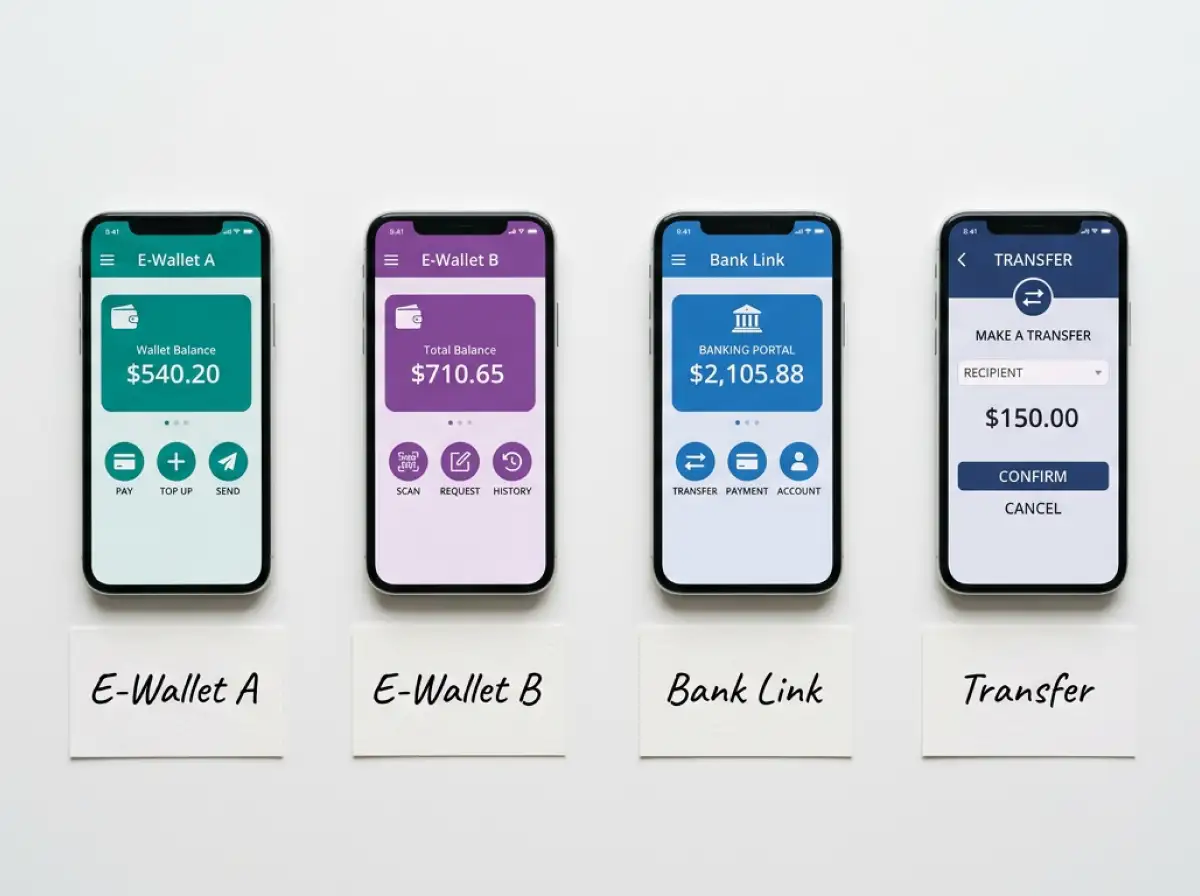
E-wallets already handle nearly a third of all online payments in Australia, and that share is climbing. But "growing" does not mean "best for everyone." My recommendation depends entirely on what you prioritise. If speed and privacy are your top concerns, Neteller or Skrill. If you want zero fees and do not mind bank-statement visibility, PayID. If you bet infrequently and want zero setup, bank transfer. The right method is the one that matches your betting pattern, not the one with the best marketing.
Is Neteller Safe and Legal for Betting in Australia?
When I first started recommending Neteller to Australian clients around 2017, the pushback was almost always the same: "Is it actually safe, or is it one of those dodgy online wallet things?" Fair question. The answer requires separating Neteller's regulatory standing from the broader question of whether e-wallets are trustworthy for gambling.
Neteller is regulated by the UK's Financial Conduct Authority (FCA), which means it operates under one of the strictest financial oversight frameworks in the world. User funds are held in segregated accounts — your betting balance is not mixed with Paysafe's operating capital. The platform uses 256-bit SSL encryption, supports two-factor authentication, and maintains fraud monitoring systems that flag unusual transaction patterns. Paysafe processes over USD 152 billion in annualised transactional volume, which confirms that this is an established financial infrastructure company, not a startup operating on goodwill.
Kai Cantwell, CEO of Responsible Wagering Australia, has argued that ensuring Australia's onshore market stays competitive is essential — because when punters cannot find the products or payment options they want domestically, they do not stop gambling; they go offshore. A strong national framework protects Australians while preserving funding for sport and racing and ensuring that initiatives like BetStop are not undermined by unregulated operators.
The legality question is simpler than it appears. Using Neteller for sports betting in Australia is legal, provided you bet with a licensed Australian operator and fund your e-wallet from approved sources (debit cards or bank transfers — not credit). The Interactive Gambling Act governs online wagering at the federal level, and the Australian Communications and Media Authority (ACMA) enforces it. Neteller itself is a payment method, not a gambling operator, so the legality rests on where you bet, not how you pay.
ACMA administers both the Interactive Gambling Act enforcement and the BetStop national self-exclusion register. Their remit covers blocking illegal offshore gambling sites, enforcing advertising standards, and ensuring licensed operators comply with consumer protection rules — including the 2024 credit card ban.
The genuine risks are not about Neteller's security infrastructure. They are about user behaviour: weak passwords, phishing scams targeting e-wallet holders, and the temptation to use offshore sportsbooks where neither Australian regulators nor Neteller's dispute-resolution systems can protect you. Australia's offshore gambling market is estimated at USD 2.5 billion annually, and 36% of the nation's online gambling activity occurs on unlicensed sites. If you use Neteller at one of those sites, you forfeit every consumer protection that makes the regulated market safer.
The State of Online Betting in Australia
You cannot understand Neteller's role in Australian betting without understanding the market it operates in. And that market is far larger, more complex, and more rapidly evolving than most punters realise.
Statista projects Australia's total gambling sector at USD 15.88 billion in revenue for 2025, with USD 7.32 billion coming from sports betting alone. User penetration across the gambling sector sits at 77.8%, with forecasts pointing to 23.6 million users by 2030. These are not niche numbers. Gambling is woven into Australian culture at a level that few other countries match.
AU Gambling Revenue
US$15.88 billion (2025)
Sports Betting Revenue
US$7.32 billion (2025)
Online Channel Share
72.8% of sports betting
The online shift is the relevant trend for payment methods. Over 56.1% of Australian gamblers now play predominantly online, and the digital channel accounts for the vast majority of sports betting turnover. That concentration of activity through digital platforms makes the payment experience — how quickly you can deposit, how cheaply you can withdraw, how securely your funds are handled — a core part of the product, not a peripheral concern.
Australia's market also faces a growing challenge from the offshore sector. Unlicensed sites now attract a significant slice of the country's online gambling activity, and notably, half of Australians who gamble on offshore platforms had an active registration in BetStop at the time. That statistic underscores a fundamental tension: tighter domestic regulation pushes some punters toward unregulated alternatives, which offer none of the consumer protections that make the licensed market safer.
For Neteller users, the market context matters because it shapes what operators offer and how they prioritise payment methods. In a USD 5.5 billion online market growing at a compound annual rate of 5.67%, sportsbooks are competing aggressively for deposits. That competition benefits punters who understand their payment options — including when to use Neteller, when to use an alternative, and how to avoid the fee traps that erode your bankroll over time.
Responsible Gambling Tools and BetStop
I almost did not include this section. Not because responsible gambling is unimportant — it is the most important topic in this entire guide — but because most betting guides handle it with a token paragraph at the bottom that reads like a legal disclaimer. That approach helps no one.
Here is the uncomfortable reality: overall gambling participation in Australia has actually declined to 58.8% in 2025, yet risky gambling behaviour has risen sharply — from 13.7% in 2024 to 19.4% in 2025. The ANU Centre for Social Policy Research describes gambling harm as a major public health issue, noting that declining participation alongside increasing risk levels represents a concerning trend. Fewer people are gambling, but those who do are gambling more dangerously.
The ANU POLIS research team put it plainly: gambling harm remains a major public health issue in Australia, with recent trends showing declining participation yet increasing levels of risky gambling. That paradox — fewer players, more harm — should inform how every punter thinks about their own behaviour.

BetStop, Australia's national self-exclusion register, has enrolled 59,830 users since its August 2023 launch, with 37,247 maintaining active exclusions as of March 2026. Of those who registered, 39% chose lifetime self-exclusion, and another 38% selected periods ranging from three months to two years. These numbers represent real people making difficult decisions about their own gambling — and the register is one of the few tools available at the national level.
BetStop currently has around 37,000 active participants, but estimates suggest approximately 400,000 Australians qualify as high-risk gamblers. The gap between those numbers highlights the limitations of voluntary self-exclusion as a standalone tool. BetStop is a useful resource, but it is not a comprehensive solution to problem gambling.
For Neteller users specifically, payment controls represent an underused layer of protection. You can set deposit limits within both your Neteller account and your sportsbook account. You can monitor your transaction history to spot patterns — escalating deposit amounts, increasing frequency, deposits made late at night — that signal shifting behaviour. And 5.9% of Australian adults reported experiencing harm from someone else's gambling in the past year, a reminder that the impact extends beyond the person placing the bet.
If you or someone you know is experiencing difficulty with gambling, services like Gambling Help Online (1800 858 858) and GambleAware provide free, confidential support. The strongest move a punter can make is recognising the line between entertainment and harm before crossing it.
Frequently Asked Questions
Is Neteller legal for sports betting in Australia?
Yes. Neteller is a legal payment method for sports betting in Australia when used at operators licensed under the Interactive Gambling Act. The legality depends on the sportsbook holding a valid Australian licence and on your Neteller account being funded from approved sources — debit cards or bank transfers. Credit-funded Neteller deposits for wagering are prohibited under the June 2024 ban.
How do I deposit with Neteller at an Australian betting site?
Log into your sportsbook account, go to the cashier or banking section, select Neteller, enter the deposit amount, and authenticate through your Neteller email and secure ID or the Neteller app. The transaction typically processes in under 60 seconds. Your Neteller account must already have a funded balance — loading funds via debit card takes minutes, while bank transfers may take one to three business days.
What fees does Neteller charge for betting deposits and withdrawals?
Neteller's fees depend on the transaction type. Funding your Neteller account via debit card can cost 0% to 2.5%. Deposits from Neteller to a sportsbook are typically free (though some operators add a surcharge). Withdrawals from sportsbooks to Neteller are usually fee-free on the operator side. Transferring from Neteller to your bank account incurs a flat fee or percentage. Currency conversion adds up to 3.99% if your Neteller account is not set to AUD. An inactivity fee of USD 5 per month applies after 12 months of no activity.
How long do Neteller withdrawals take from betting sites?
The total withdrawal time depends on the sportsbook's internal processing, which ranges from a few hours to two business days. Once the operator releases the funds, the transfer to your Neteller balance is near-instant. Moving money from Neteller to your Australian bank account adds another one to three business days. The fastest end-to-end experience I have recorded is under two hours; the slowest was roughly 48 hours for the bookmaker stage alone.
Can I use Neteller with a credit card for betting after the 2024 ban?
No. Since 11 June 2024, Australian law prohibits using credit cards, credit-funded digital wallets, and cryptocurrency for online wagering. You cannot fund your Neteller account with a credit card and then deposit at a sportsbook — the funds are considered credit-sourced. You can still use Neteller for betting, but only if the balance is loaded from a debit card or bank transfer.
What are the best alternatives to Neteller for Australian punters?
The main alternatives are Skrill (similar e-wallet functionality, same parent company), PayID (instant bank-to-bookmaker transfers with no intermediary fees but lower privacy), debit cards (fast deposits, no setup required), and bank transfers (universally accepted, no fees, but slower). Each method trades off speed, privacy, cost, and convenience differently. The right choice depends on whether you prioritise keeping betting transactions separate from your bank account, minimising fees, or maximising deposit speed.
Is Neteller safer than using a bank card directly for betting?
Neteller adds a layer of separation between your bank and the sportsbook, which some punters consider a security advantage — the operator never sees your bank details. Neteller also offers two-factor authentication, transaction monitoring, and the ability to set spending limits within the wallet itself. However, your bank card likely carries its own fraud protections (chargeback rights, for example) that Neteller does not replicate. Neither method is categorically "safer" — they protect against different risks.
